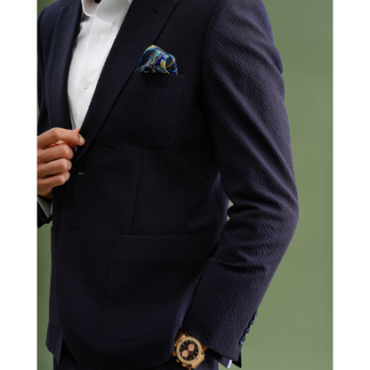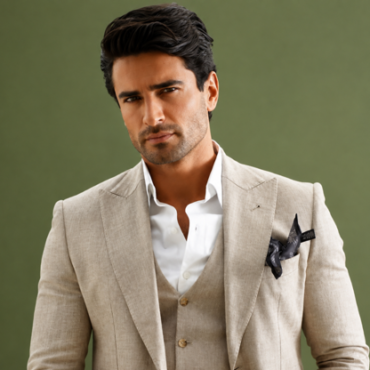

One of the most important things when living in Dubai is personal presentation. How you present yourself to the public through the way you dress, speak, and carry yourself influences your status in society to a great extent. That said, Dubai has no shortage of men walking around in suits that do not fit properly. You must have noticed suits that pull across the shoulders, trousers that pool at the ankle because they’re the wrong length, or sleeves that stop a few inches too short. People who wear ill-fitting clothes aren’t the ones who don’t care about their status or how others perceive them. They are the ones who still could not find the right tailor who knows their way around suits.
In very rare cases, none of the above issues is a fabric problem but a tailoring problem, and it usually comes down to choosing the wrong person for the job. This is why the second most important factor, after the fabric, you need to be careful about when considering getting a suit is a tailoring house, like M2M, who knows what.
If you are a Jumeirah resident or live nearby, you know the area has become a hub for bespoke menswear. That said, not every signoboard delivers the same standard of work. So if you’re looking for the right tailor in Jumeirah and plan to book a fitting, it helps to know what separates a good tailor from a great one. Even if this seems unimportant right now, the difference will show from the first time you put the suit on.
What makes Jumeirah the go-to spot for bespoke tailoring 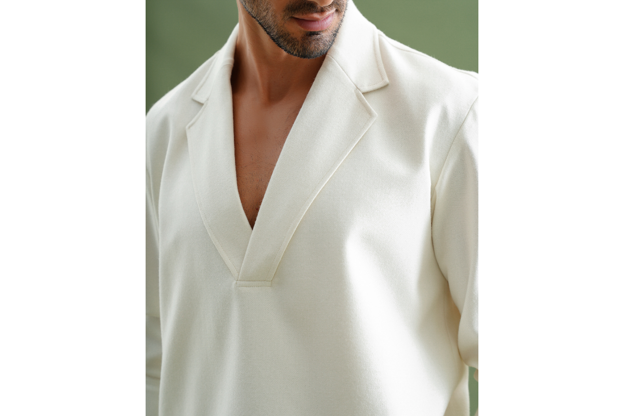
Dubai’s busiest social and business districts are all situated close to Jumeirah, making it a hub of people wearing or wanting to wear sharp clothing. This specialty naturally attracts a clientele that needs well-made clothing for boardrooms, weddings, and, of course, everything in between. That’s why, over the years, many established names have set up shop here, bringing skilled master tailors who fit suits with imported fabrics and decades of craftsmanship for men in Jumeirah and beyond.
The reason why most people search for tailors in Jumeirah rather than settling for the nearest alterations shop is this. The abundance of experienced tailoring shops in this part of the city gives customers real choice. However, this choice only works in your favor if you know what to look for.
The factors that make a tailor worth your time
There is a list of things you need to check before booking a fitting with a tailoring house or tailor in Jumeirah. This part will save you a wasted appointment, time, and, more importantly, a wasted suit.
- Fabric sourcing
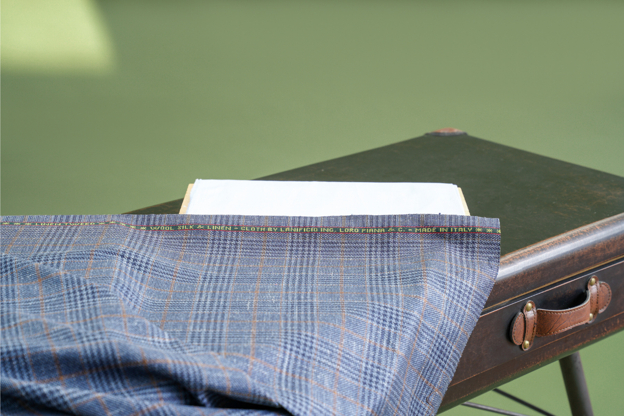
No matter how skilled they are, a tailor is only as good as the material they pick for you. So, if you’re making a long-term investment in a suit, choose tailors in Jumeirah who work directly with recognised European fabric houses rather than unbranded rolls of cloth from unknown or unclear sources.
When you are verifying sources, look for names such as Loro Piana, Zegna, Scabel, Cerruti, Holland&Sherry, and Thomas Mason. These names assure consistent weave quality, color retention, and durability that generic fabric cannot match, rather than just being recognisable labels.
The easiest way to do this is to ask to see their fabric books whenever you walk into a tailoring house. A credible tailor will show you the fabric book and explain the difference in feel and finish between 130s, 150s, and 180s wool blends. -
Measuring technique
Everyone knows how important good measuring techniques are when tailoring any outfit, and this is where most of us end up compromising on the final result when tailors mess up. Although many tailors fall short in taking measurements, not everyone does. Skilled tailors in Jumeirah are an exception, and instead of a two-minute tape-measure job, they take between fifteen and twenty individual measurements for a single suit. These many measurements account for posture, shoulder slope, and even how you naturally stand.So, if your first appointment feels rushed, that is a warning sign you probably shouldn’t trust that tailor yet. Because a tailor who genuinely cares about fit will ask you to move: walk, sit, and raise your arms before finalising the measurements.
- Made-to-measure vs. bespoke
Many people still believe that made-to-measure is the same as bespoke and use these terms interchangeably. Well, they are not the same.- Made-to-measure starts from an existing pattern block that will then be adjusted to fit your measurements
- Bespoke, on the other hand, builds a pattern from scratch based entirely on your measurements, with multiple fittings throughout the process.
It’s important to know exactly which service you are paying for. Only a trustworthy tailoring house will explain the difference between these two upfront and not let the terms blend and confuse you. This step often changes the customer’s expectations, fitting schedule, and sometimes their budget.
-
Experience and craftsmanship history
Tailoring is a craft passed down through years of hands-on practice, and sometimes across generations; hence, longevity matters a lot in this trade. So, do a little research on the tailoring house to find out how long it has been operating and who the master craftsmen behind the scenes are before booking. This will help you discover things that you would find interesting, and you might land one of the most respected and skilled tailors in Jumeirah who has been operating for long enough to know their craft better than anyone. -
Finishing details
Contrary to what a lot of people think, one of the most ignored but real telltales of tailoring quality is the small details, not the jacket silhouette.- Canvassed construction in the chest instead of fused interlining
- Hand-stitched buttonholes versus machine-stitched ones
- Properly matched lining and button quality
- Clean, even stitching along the lapels
Frequently Asked Questions
Is made-to-measure cheaper than bespoke?
Even if there might be exceptions, the answer is generally yes. As stated before, made-to-measure starts with an existing pattern block, which is later developed to your measurements and requirements. Made-to-measure suits reduce labour time but offer fewer options than bespoke. The latter, on the other hand, involves building patterns from scratch and usually costs more because it requires additional fittings and craftsmanship.
Can I bring my own fabric to a tailor?
While some tailoring houses allow it, many tailors, including us, prefer to work with their own fabrics. This lets us guarantee the fabric’s quality and origin, making it easier for you to verify the shop’s credentials.
How many suits does a working professional need in Dubai?
There is no specific number that everyone in Dubai needs. The number depends on factors such as your role in the company and whether you work in a fully formal setting or a more casual one. However, most professionals find that three to five well-made suits in versatile colours cover most of their needs.