When you are wearing a shirt, the first thing that gets noticed is obviously the fit. A bad fit easily affects your image and how others see you, regardless of the social setting you are in. However, a fit is not something that someone remembers about your outfit. It will be something that makes the shirt unique, something that says, “you”. However, this is not often possible with off-the-rack shirts that follow a standard pattern designed to suit everyone in general. Rather than making you stand out, they focus on speed and volume, as they should. This means that if you are going for a look that is your personal signature, you need to invest in custom shirts in Dubai, and you will see the difference that it will make.
Small stuff such as the initial stitched on a cuff, a collar that sits just right, or buttons that you picked yourself will stay with anyone who meets you. At M2M, The House of Bespoke, a tailored shirt goes beyond sleeve lengths or chest measurements. We regularly see clients come in for a better fit and leave talking about cuff geometry, collar stance, hand-stitched monograms, and thread selection. When you order custom shirts in Dubai, these details can turn a well-made shirt into something that is uniquely yours. This article covers how monogramming works, where it looks best, and how to choose personal details you will still like in half a decade.
Monogramming: where did it come from? 
The origin of monogramming is an interesting story, and it has nothing to do with being rich and displaying luxury. Rather, initials on shirts started as a practical habit. Back in the day, before home laundry was a common thing, shirts had to be sent out to get cleaned. Stitching initials onto them made sure yours came back to you.
Over time, the mark stopped being about identification and became a sign of a person’s identity. In modern times, embroidered initials are usually a sign of a made-to-measure outfit. However, one thing that we followed throughout, and even now, is that a monogram should be small and quiet. It should not be treated as a logo, but rather a personal mark that shows class.
Where to place the monogram?
Although many of us do not consider the placement of a monogram to be very important, it really is. Some of the common options for monogram placement include:
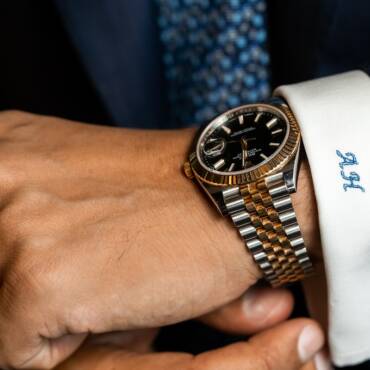
- Left cuff: this is the most common and most popular choice for business shirts. It stays hidden until you reach for something on the table, perhaps a pen, or check your watch.
- Chest pocket: this works well if your bespoke shirts have pockets. However, this placement is a little risky considering the fact that it can feel dated or formal depending on the style. That said, keeping the lettering a little modest might help with this concern.
- Left chest: this is another one of the classic spots. The left chest placement roughly aligns with the second or third button down from the collar. This is considered a little more traditional in comparison and more visible.
- Shirt tail or left waist: this is more of a private option. Nobody actually sees this monogram except you, but that is the appeal for some people.
Putting initials right on the edge of the cuff is not preferred by tailors in Jumeirah or anywhere else, for that matter. This is because this practice can make the design look crowded. Most tailors place them a little above the cuff edge, centered or toward the buttonhole side, so that they sit clean and readable. If you are not sure about where to place your initials, go for the left cuff. It is always the safest starting point for formal wear, while the chest placement is a better option for a more relaxed outfit.
Get the letter right, always
As simple as it sounds, sometimes people get the order of initials wrong. The three different ways you can go about your initials are,
- All letters the same size: use the first, middle, and last initials of your name.
- Larger centre letter: this is the traditional way. Here, the last name initial will be placed in the middle, in a bigger size, with the first and middle initials on either side of it.
- Two initials: this option skips the middle initial entirely. The two-initial method only uses the first and last letters, which makes it look cleaner while working well on a cuff.
Thread color and font
Some people prefer their monograms loud, while most want it to be subtle. The thread color decides the subtlety of a design, and the usual approaches include:
- Tone on tone: this is the easiest method where you choose a color that is close to the color of your shirt fabric. A tone-on-tone design will be barely visible, but refined.
- Bold color: this is a common choice when it comes to single statement shirts. You can get it done in burgundy or a darker accent. However, bold color monograms are not recommended for every shirt in your wardrobe.
- Contrast: contrasting colors are easy to read without being showy. For example, you can use a navy or deep grey thread on a white or light blue shirt, and it will look classy.
The same logic is applicable for fonts as well.
- Block letters: they will be perceived as classic and sharp
- Script fonts: script fonts might look elegant at first glance, but they can be hard to read once stitched at small size.
The font will be considered too fancy if you cannot tell your letters apart from arm’s length.
One more thing to keep in mind: fabric weight matters a lot more than you imagine. A dense monogram on a very fine, lightweight cotton, where the thread is heavier than the cloth, can damage the outfit after a few uses. This is one of the reasons why the outfit fabric and monogram thread should be decided together.
Matching details to the occasion
Deciding on a detail consumes a whole lot of your time. The easiest way to manage this is to decide what the shirt is for first.
- Daily office wear: the most recommended combination for daily office wear is a cuff monogram, tone-on-tone thread or navy thread, and two initials to keep it simple and formal.
- Casual linen shirts: chest placement on a casual linen outfit can work. You can also use a slightly bolder thread color to stand out.
- Wedding or formal events: as opposed to what many people think, monogramming details on festive outfits need to be minimal. You can go about it as a discreet monogram on the cuff or shirt tail, or none at all.
- Gifts: if you are gifting the outfit, always use the recipient’s initials, not yours. Also confirm the order of letters before stitching.
Why choose M2M for your bespoke shirts
Founded in M2M has nearly two decades of experience in making custom shirts in Dubai. Our approach involves taking the measurements carefully, choosing good quality fabric, and letting you decide the details. We offer personalized monogramming with your initials or name on shirts and suits, besides custom buttons, linings, and stitching. If you have a particular placement or thread color in mind, contact us and book a visit, and we will discuss further until you find something that reflects with you.
Frequently Asked Questions
1. Can I add a monogram to any shirt?
Mostly, yes. The thing is, most shirts can take one, but the fabric needs to be able to carry the weight of the thread used for embroidery. Very fine, lightweight cloth may need a smaller or lighter monogram. If you have more questions, we can give you more details at the fitting.
2. Should I use my full name or just initials?
That is more of a personal choice. However, initials are the traditional choice and look neater in comparison. M2M also offers name monogramming if you prefer it. If you are going for a full name design, remember that it works better on a chest or shirt tail rather than on a cuff.
3. Does a monogram make a shirt less formal?
That depends on your fabric choice as well as the thread choice. A monogram alone does not make a shirt look less formal as long as it is small and in a sensible color. A tone-on-tone monogram suits formal and business wear alike. On the other hand, bold colors and large letters make a shirt feel more casual.