
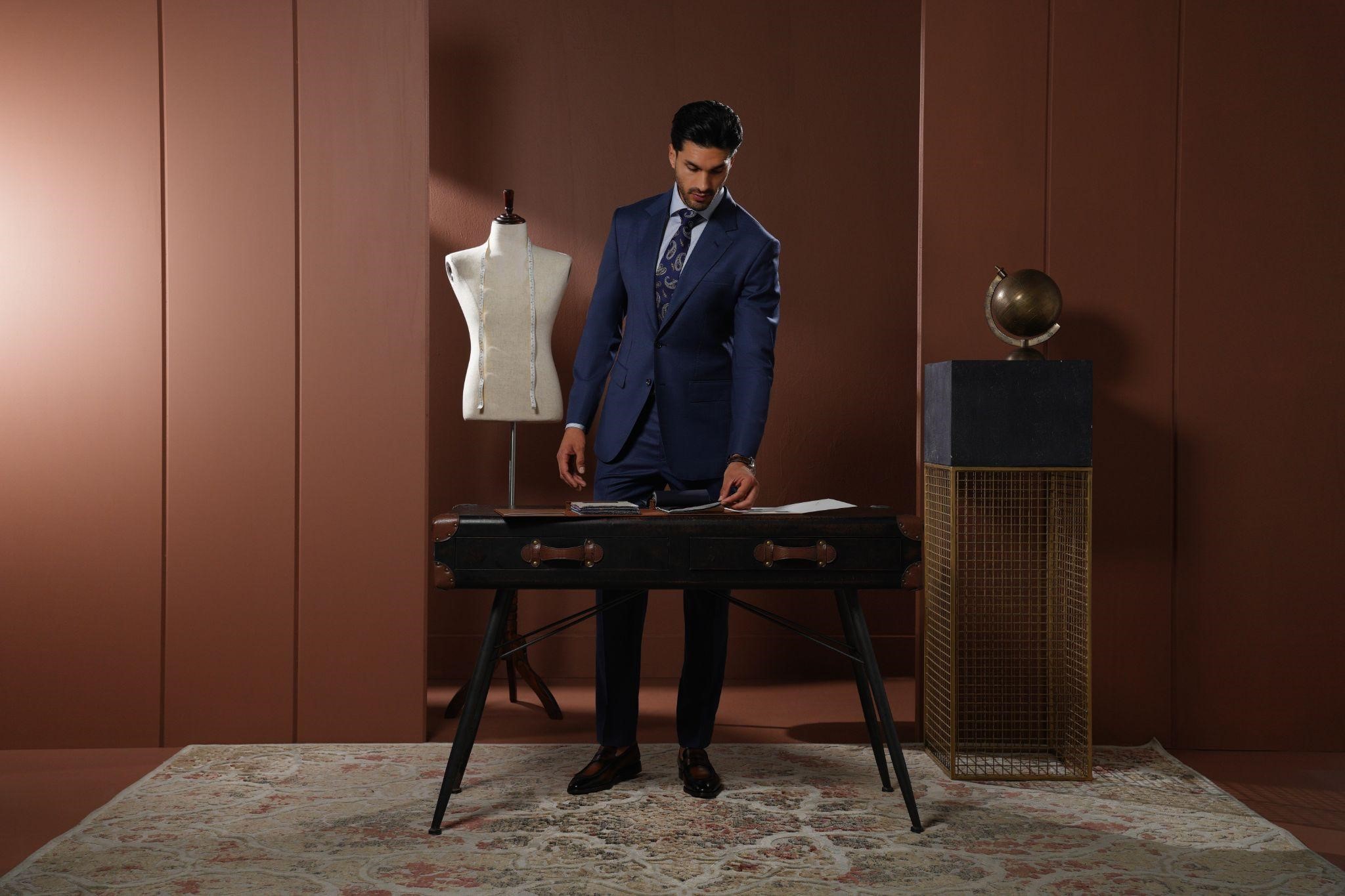
What are the steps involved in getting a suit made? You walk into a tailor, get your measurements taken, choose the lapel style, and even discuss what kind of buttons you want on your suit. Then comes the part where you choose the material for your brand-new suit: the tailor will lay out a whole range of options in front of you, and you will start rethinking your decision to get a custom suit.
This is where most people end up choosing something that looks nice without weighing the pros and cons of the fabric, leaving the rest of the heavy lifting to the tailor. We are not saying that there is something wrong with it or that it wouldn’t work. It might work for some people. But it is always better to put a little more effort into the whole process and actually try to understand the fabrics yourself.
This one step changes everything. This will turn you into an active customer who makes real choices about what he is wearing and why. This fabric guide covers everything you need to know about fabrics for bespoke shirts or full suits, whichever you are considering having made.
Why fabric choice matters
Most of us already know the answer to this question. The fabric you are wearing, regardless of whether it’s a suit or something else, is what feels against your skin all day. Sure, the fit gets all the attention, but the fabric is what breathes in Dubai’s heat, holds a crease through a long flight, and looks sharp in the morning and respectable in the evening.
The fabric decides how your suit drapes, how long it lasts, and how easily it wrinkles. It also decides whether you will be comfortable wearing it or sweating through it throughout the day. A beautiful cut might look good on you, but it will not save your suit made from the wrong material, and yes, there are wrong and right materials when it comes to a suit.
The core four: what suits are made of
If you want a high-quality suit, you need to choose natural fibers. Synthetic materials might look good for a moment, but they trap heat and can make you feel uncomfortable over time.
1. Wool
Wool is definitely one of the top choices for suits. If you have ever visited a tailor to get a suit made, most of the materials you must have seen there are either wool or wool blends. This is for a good reason: wool drapes well, retains its shape, sheds wrinkles quickly when hung up, and breathes better than most people imagine. Even better, it takes natural dyes easily and beautifully! It can also be processed into different weights. Sounds good altogether, doesn’t it?
There is a specific number, called the “Super” number, assigned to wool suits. It goes like this: Super 100s, Super 130s, and Super 180s, referring to the fineness of the wool fibre used.
- Super 100s to Super 120s: They are durable, hold shape well, and are good for daily wear. However, they are slightly on the heavier side compared to the others.
- Super 130s to Super 150s: They are comparatively finer, softer, and more luxurious. It offers a great balance between durability and comfort and is, therefore, a solid choice for most men.
- Super 160s and Super 180s: This range is extremely soft, lightweight, and delicate. For this reason, they are better suited to special occasions than to everyday wear.
2. Linen
Linen is a natural fibre made from the flax plant and is the best choice for summer weather. Linen allows maximum airflow with its open weave, absorbs moisture and dries quickly, and keeps you cool in hot climates like Dubai.
However, linen wrinkles easily. Although it is part of its character, it probably wouldn’t be the best choice if you are attending a formal corporate event. That said, a linen suit makes you look relaxed in a semi-formal or casual setting.
If you are in Dubai or travel to warmer climates regularly, a linen suit or a bespoke linen shirt is definitely worth considering. If you are getting a linen suit made for your casual Fridays or beach weddings, go for a slightly looser cut, as it lets air circulate and hides wrinkles better.
3. Cotton
Cotton is not as formal as wool but not as informal as linen. It sits somewhere in between. If you compare, it is more structured than linen but not as premium or elastic as wool. Cotton is a very comfortable choice for warm-weather business wear. For bespoke shirts, Oxford cotton is a solid choice and popular in Dubai.
Cotton is sturdy, breathable, and holds its shape through ironing. However, it will develop crease lines at the elbows and behind the knees over time. Although these creases give it a more relaxed look, it may not always look very professional, especially in a formal corporate setting.
4. Cashmere and cashmere blends
Cashmere, as most people know, is derived from the undercoat of cashmere goats, and they are incredibly soft and luxurious.
There are pure cashmere suits, and then there are cashmere blend suits. The former is a solid investment not just in terms of money but also effort and maintenance. That’s why most people go for the latter, cashmere-blend suits. They offer the softness of cashmere with the durability and structure of another premium material we mentioned before: wool. So, basically, cashmere blend suits are considered a practical luxury.
Cashmere, however, is not without its flaws. They lack the tensile strength of wool and could easily wear thin at friction points of the suits, such as the elbows and thighs.
5. Silk
Silk is a naturally lustrous material. It is also strong and lightweight. They are not a very common or popular fabric for suiting. Pure silk is usually reserved for formal evening wear or in smoking jackets. Its common use involves adding a subtle sheen and a smooth hand-feel to winter wool or summer linens in the form of silk blends.
Fabric checklist for your suit fitting
- What is the occasion and climate this is getting made for?
- What is the approximate weight I need based on when I will wear it?
- Where is it sourced from?
- For bespoke shirts, is the shirting fabric different from the suiting fabric?
- Where do you need the pattern, if you need one? Or do you want a solid one?
- Are you clear on the care requirements of the fabric you have chosen?
Frequently Asked Questions
”1.
No, you cannot; the weave of suiting fabrics is different from that of shirting fabric, and neither of them would suit the requirements of the other. The suiting fabric is heavier and stiffer. Bespoke shirts, on the other hand, need shirting fabric that is lighter, finer, and woven to allow the drape and movement a normal shirt requires.
”2.
You need to hang your wool suit properly using a cedar or wooden hanger every time after you wear it. Allow it to air out for 24 hours before putting it back in the wardrobe. Dry clean the suit occasionally, maybe once or twice a season. However, you need to brush off dust with a soft clothes brush every once in a while.
”3.
A standard two-piece suit typically needs 3 to 3.5 metres of fabric. On the other hand, a three-piece suit needs around 4 meters on average. Your tailor can give you the exact numbers based on your measurements and the pattern of your new suit.